
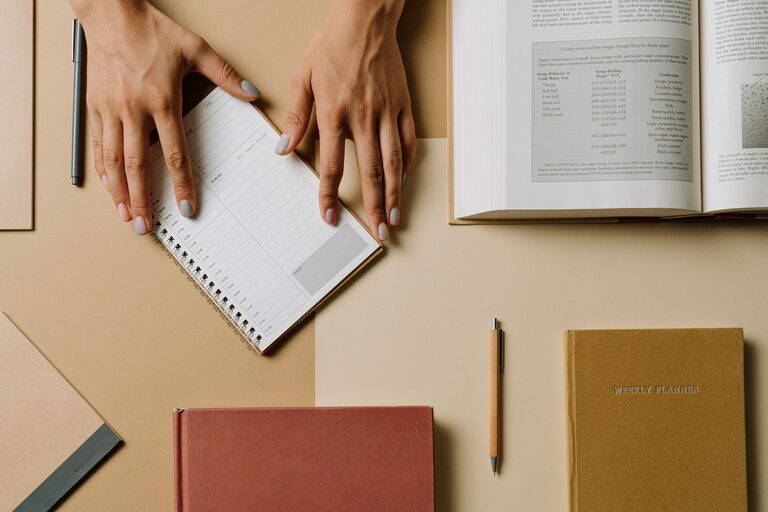
Choosing a notebook sounds simple until you stand in front of a shelf filled with different sizes, paper types, bindings, and covers. A notebook can look beautiful and still be uncomfortable to carry, difficult to write in, or too specialized for your everyday needs.
The best notebook is not necessarily the most expensive or attractive one. It is the notebook that fits naturally into your routine. When the size, layout, paper, and design match the way you think and work, you are far more likely to use it regularly.
Start with how you plan to use it
Before comparing brands or cover designs, decide what the notebook needs to do. A notebook for quick lists has different requirements from one used for long-form writing, sketching, or class notes.
Consider your most common uses:
– Daily to-do lists
– Meeting or class notes
– Personal journaling
– Creative writing
– Drawing and sketching
– Travel planning
– Recipe notes
– Project planning
– Recording ideas on the go
You do not need to choose only one purpose, but having a main use will make the decision easier. If you want one notebook for everything, look for a flexible format with enough space for both short notes and longer entries.
It can also help to think about your past habits. Do you usually write on loose sheets of paper, in phone notes, or on sticky notes? Your current habits may reveal what you need. For example, someone who writes quick reminders may prefer a small notebook with easy-to-flip pages, while someone who enjoys longer entries may want a larger book with comfortable writing space.
Choose a size that fits your routine
Notebook size affects how often you carry and use it. A large notebook may provide plenty of room, but it can become inconvenient if it does not fit in your bag. A small notebook is portable, but its pages may feel cramped.
Small notebooks
Small notebooks are useful for:
– Short reminders
– Shopping lists
– Quick ideas
– Pocket carry
– Minimal daily planning
They are easy to keep nearby, which can make them a good choice for spontaneous notes. However, they may not work well for detailed writing or pages that need diagrams.
Medium notebooks
Medium-sized notebooks offer a practical balance between portability and writing space. They are often a good choice for general note-taking, journaling, and work or school use.
If you are unsure where to start, a medium notebook is usually the safest option. It is large enough for comfortable writing without being difficult to carry.
Large notebooks
Large notebooks are best when you need generous space for:
– Detailed notes
– Drawings and diagrams
– Project planning
– Long journal entries
– Wide layouts and tables
They are more comfortable to use at a desk, but they may be less convenient for everyday travel. Consider whether the notebook will mostly stay in one place or move with you.
Select the right page layout
The page layout should support the way you write. A beautiful notebook can become frustrating if its pages do not suit your needs.
Lined pages
Lined paper is a reliable choice for writing, lists, and notes. Look at the line spacing before buying. Narrow lines fit more text but may feel cramped, while wider spacing can be easier for larger handwriting.
Blank pages
Blank paper gives you complete freedom. It works well for sketches, mind maps, diagrams, and writing without visual restrictions. The downside is that handwriting may become uneven unless you prefer a more relaxed style.
Grid pages
Grid paper is versatile for planning, charts, diagrams, and neat writing. Fine grids provide subtle guidance, while larger grids are easier to see and can be useful for visual layouts.
Dotted pages
Dotted pages provide structure without strong lines. They are popular for flexible planning, lettering, and organized notes. Choose dots that are visible enough to guide you but subtle enough not to distract.
Mixed layouts
Some notebooks combine different layouts or include sections for calendars, lists, and notes. These can be useful if you enjoy built-in structure. However, make sure the format matches your routine. Unused sections can make the notebook feel restrictive rather than helpful.
Pay attention to paper quality
Paper affects how pleasant a notebook feels to use. If the pages are too thin, ink may show through or bleed to the other side. If the paper is too smooth or rough, your pen may not feel comfortable.
Think about the tools you normally use:
– Pencil
– Ballpoint pen
– Gel pen
– Fountain pen
– Marker
– Colored pencil
If you usually use a ballpoint or pencil, many standard notebooks will work well. If you use wetter inks or markers, look for thicker paper designed to reduce show-through. When possible, test a page before buying or read reviews that mention ink performance.
Paper color also matters. Bright white paper offers strong contrast, while cream or off-white paper can create a softer appearance. Neither is universally better; choose the color that feels easiest for you to read and write on.
Consider the binding
A notebook’s binding affects how it opens, how much desk space it needs, and whether it stays comfortable as you write.
Spiral binding
Spiral notebooks often open flat and make it easy to fold pages back. They are practical for school, work, and everyday note-taking. The spiral can take up extra space in a bag, and the edges may catch on other items.
Lay-flat binding
A lay-flat notebook stays open without needing to hold the pages down. This is helpful for longer writing sessions and two-page layouts. These notebooks may cost more, but the convenience can make regular use easier.
Sewn or glued binding
Traditional bindings can look polished and feel compact. Sewn notebooks often open more easily than glued ones, while glued pages may not lie flat. Check how far the notebook opens before buying if that feature matters to you.
Discbound or refillable designs
Refillable notebooks let you move, replace, or add pages. They can be useful for changing projects and long-term organization. On the other hand, the covers and accessories may add bulk, so consider whether you want that extra flexibility.
Match the notebook to your environment
Think about where you will use it most. A notebook for a desk can be larger and more delicate than one carried on public transportation or used outdoors.
Ask yourself:
– Will it fit in my usual bag?
– Can I open it comfortably at my desk?
– Is the cover durable enough for daily use?
– Will I need to write while standing?
– Does it have space for a pen?
– Is it comfortable to use with either hand?
A durable cover is valuable if the notebook travels often. A flexible cover may be lighter and easier to pack, while a hard cover offers more protection and a stable writing surface.
Avoid buying for an imaginary version of yourself
One common mistake is choosing a notebook for a habit you hope to develop rather than one that fits your current life. A large planner may look inspiring, but it will not help if you rarely plan by the hour. A specialized sketchbook may go unused if you prefer making quick notes.
Choose something that lowers the effort required to begin. A notebook with a simple design and an easy layout may be more useful than one filled with features you do not need.
You can also start with an inexpensive notebook while testing a new habit. Once you know what size, paper, and layout work for you, investing in a higher-quality option becomes easier.
Make the first page inviting
Even the right notebook may remain unused if starting feels too formal. Give yourself permission to use it imperfectly. The first page does not need to be a perfect introduction, and every page does not need to look organized.
Try starting with:
– A short list of current priorities
– A page of ideas
– A simple weekly plan
– A note about why you bought the notebook
– A small drawing or test of your favorite pen
The goal is to make the notebook feel accessible. Cross-outs, messy notes, and unfinished thoughts are normal parts of using it.
The best notebook is the one within reach
When choosing a notebook, focus less on trends and more on fit. The right size, paper, layout, binding, and cover should make writing easy in the places and situations where you actually spend time.
If you are uncertain, choose a medium-sized notebook with a flexible layout, comfortable paper, and a durable cover. Keep it somewhere visible, use it for one clear purpose at first, and adjust your choice based on real experience. A notebook becomes valuable not because it is perfect, but because it is convenient enough to use again tomorrow.
